Don’t worry, I’m not becoming religious. After reading the Bible and the Quran… well… covering these nonsensical historic artifacts of human-made pseudo-literature is a task for another blog entry. No religion today.
I mean it literally. I just wanted more light. Nonono! That reminds of what are allegedly Goethe’s last words, “Mehr Licht”
Sinchen, stop writing nonsense and start telling about your failing battery powered LED-spotlight!
Dim Light
I have had this little battery powered LED spotlight for two years. Simple thing. Drop in four AA NiMH batteries, push button. Full power → half → off.
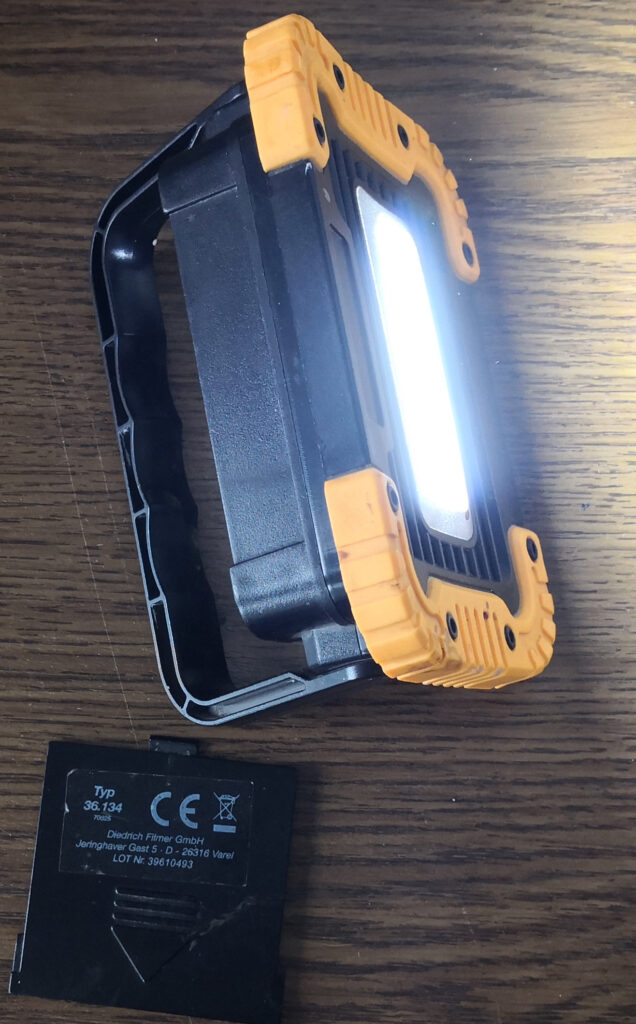
Quite a handy thing when working in dark corners or when there is no electricity in a room during renovation. What convinced me the most was using four AA. No glued-in li-ion battery that might fail when not in use for some time. I use AA batteries all the time, there always charged ones at hand. Warranty expired… and this little device started acting up. It got progressively dimmer on both power levels with known-good batteries.
Where do I get this LED driver thing for a cheap lamp? Probably nowhere. And if I did it might be more expensive than the whole device.
Enter Stage: Sloppy Repair
What does an angry little Sinchen do in such a case? Simply buy a new one that might suffer from the same issue right after warranty expires? (Some coincidence, huh?) That is not my cup of tea. I unscrewed it and saw a tiny PCB with two pairs of thin wires connected.
Battery holder ⇄ PCB ⇄ LED panel
How about eliminating the PCB altogether? Just hook up the LED panel like a classic light bulb! I desoldered the wires from the PCB and soldered them together. Tape around, done. F… the LED driver!
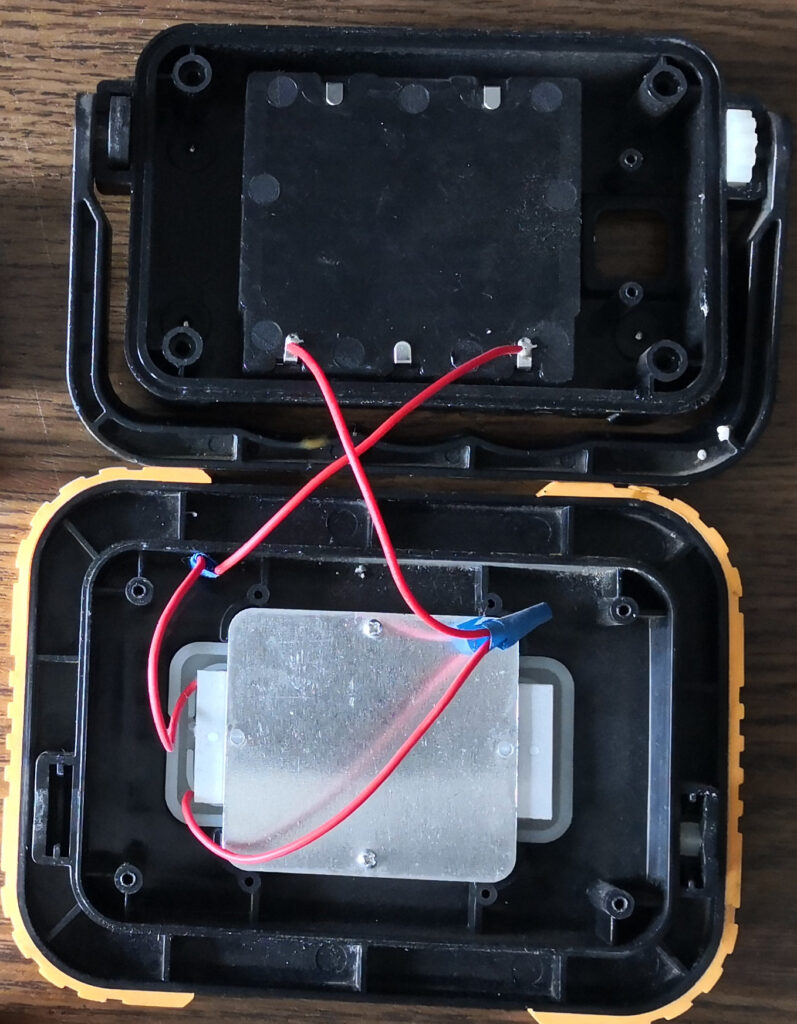
Then I asked myself how the LED panel would take that abuse? No defined voltage, no current limiting, nothing. Would it just get hot and burn through? Immediately? In a few minutes?
No, It Wouldn’t!
My sloppy repair made this light brighter than ever, but the LED panel doesn’t seem to mind the overburdening. It does got quite warm – so do the batteries. It now drains them in 60 to 90 minutes (the stronger setting originally lasted about 2 hours on one set of charged NiMH).
Eventually it will most likely burn through, but it has been in use about 20 hours since this repair; in most cases not only a few minutes at a time, but the whole battery capacity.
Since getting rid of the failed electronic part also eliminates having a power button, the only way to turn it off is removing one of the batteries. I was too lazy to fit a switch in there.